
Sources for Monroe Township Previous Residents
Each era needs a different source. A present-day assessment card supplies the parcel identifiers needed to enter the recorded-land trail. The modern deed index gives a firm starting point, but it is not a complete online archive from the county's beginning. For a household rather than an owner, use a dated directory and census together. Maps, newspapers, permits, probate, cemetery records, and historical repositories can explain gaps instead of filling them with assumptions.
| Source | Years it covers | Where held | What it shows |
|---|---|---|---|
| Current assessment card | Current tax data; historic depth not stated | County-linked search and local assessment offices | Owner, mailing and situs addresses, block/lot, class, assessment, sale or deed reference |
| Deed computer index | Deeds 1959-current; other series have separate starts | USLandRecords and County Clerk | Grantor/grantee, instrument, recording date, book/page, and chain starting point |
| Older deed books and indexes | County history reaches to 1686; Archives microfilm through 1900 | Record Room, GCHS, State Archives, and FamilySearch | Earlier conveyances, descriptions, witnesses, and adjoining-land clues |
| Farm Journal directory | 1913 | New Jersey State Library digital collection and repository catalogs | Household, family, address or route, tenure clue, and local work context |
| Federal census | 1790-1950 released schedules | NARA, FamilySearch, and library databases | Household composition, relationships, ages, birthplace, and enumeration district |
| Sanborn maps | Williamstown sheets for 1895, 1900, 1905, 1910, and 1923 | Library of Congress digital maps | Building footprint, use, street label, and lot context |
For the question of who lived here before, begin with the current parcel and work backwards through deeds. Then put people into that property timeline with a directory, census, obituary, or probate item. A directory year and a census year are different snapshots, so a difference between them is a lead to investigate, not proof of a move.
Start Past Residents at Monroe Township Parcels
Use the Gloucester County tax-records gateway to reach the assessment search. Select Monroe Township in Gloucester County before searching owner name, property location, or block and lot. Record the current owner, situs address, owner mailing address, block, lot, qualifier, property class, last sale data when shown, and a deed book/page or instrument reference. The owner mailing address and situs address are distinct facts, and neither should be silently substituted for the other.
That parcel identity matters when an older deed uses a subdivision lot, tract, road frontage, metes and bounds, or a community label instead of a current house number. A current address may carry Williamstown as a postal name even when the legal municipality is Monroe Township. If a result could refer to the Middlesex County township of the same name, return to the municipality field before building the history.
Note: Record block, lot, qualifier, and legal description early because they remain useful when an older document gives no modern street number.
Trace Monroe Township Previous Residents by Deed
The deed chain identifies owners, which is an important but incomplete path toward past residents. Search the current owner as grantee around the recorded sale date. Open the instrument when available and capture the grantor, grantee, execution date, recording date, legal description, prior deed reference, restrictions, easements, parcel identifiers, and stated consideration when it appears. The seller on that instrument becomes the next person or entity to search as grantee for the earlier purchase.
- Copy the current assessment owner and block, lot, qualifier, deed reference, and legal description.
- Search the owner as grantee in the online index and identify the deed linked to the most recent recorded transfer.
- Read the instrument and record the seller, dates, description, and earlier book/page or document reference.
- Search that seller as grantee, then repeat the same extraction for the prior transfer.
- When the online coverage or image path ends, take the accumulated legal description and references to the Record Room, historical repositories, or microfilm.
- Grantor
- The party transferring an interest in a recorded instrument, often the seller in a deed.
- Grantee
- The party receiving that interest, often the buyer in a deed.
- Chain of title
- The ordered sequence of recorded transfers for the same land, checked by legal description rather than by name alone.
- Legal description
- The deed's land description, such as block and lot, subdivision lot, tract, or metes and bounds. It can identify land when a street address is absent.
The county's land-records page explains the online index, historical cutoff notes, and copy path used for this backward search.
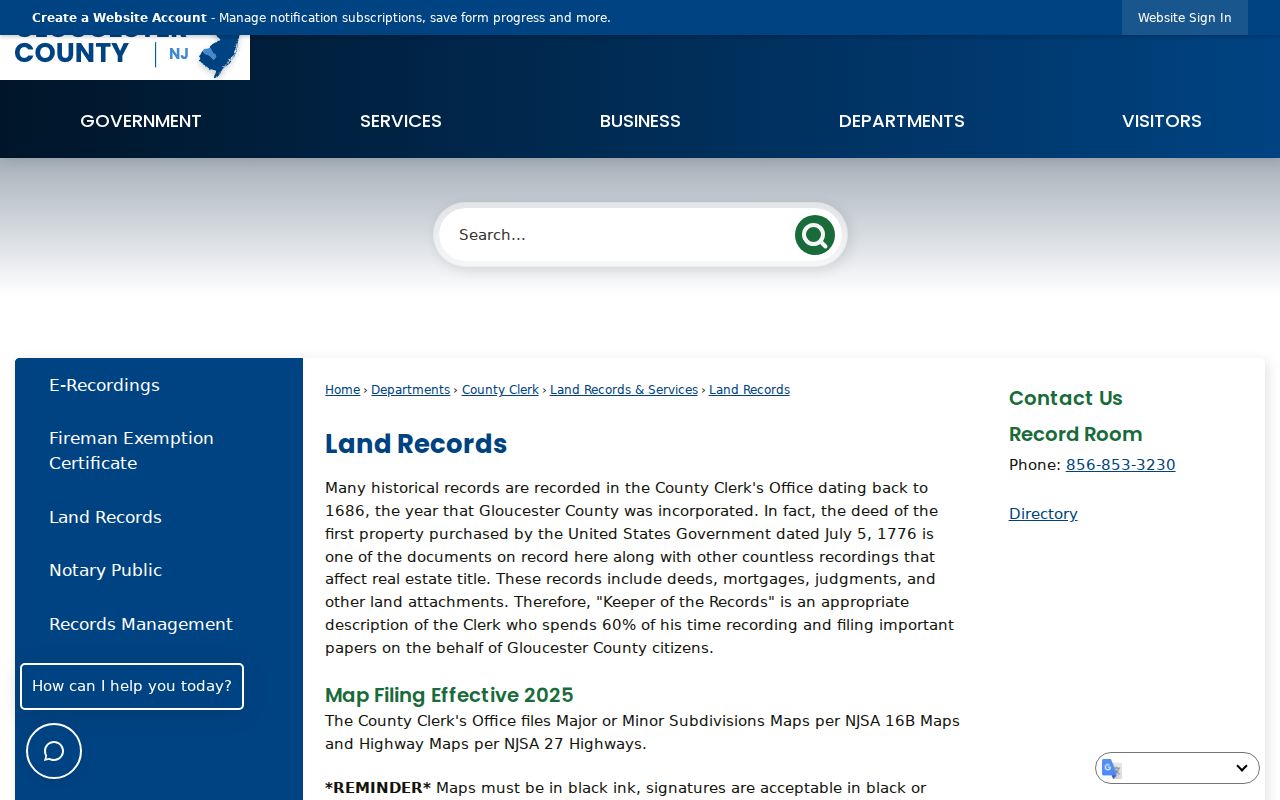
The relevant evidence is the instrument trail, not a name match by itself. Keep the legal description beside each transfer so the history remains attached to the same Monroe Township parcel.
Check Monroe Township Past Resident Limits
Gloucester County documents deeds from 1959-current in the computer index, with mortgages beginning in 1967 and other series starting later. Do not call that a full 1686-to-present online run. The county's record history is much older, and the documented fallback is the Clerk's older books and indexes, county microfilm, GCHS, the State Archives, and FamilySearch's digitized county-deed collection.
There is another key limitation. Recorded instruments have not been cross-indexed by party type after October 1, 2016. Search both grantor and grantee roles, plus initials, married names, company names, and spelling variants. A role filter is not exhaustive. If an image is unavailable, call the County Clerk Record Room at 856-853-3230 or visit the county counter; Daniel's Law can leave an index result visible while restricting an image or physical book page.
Note: When an older transfer is not online, the right next step is the record room or archive, not a guess based on a matching surname.
Use Monroe Township Past Resident Archives
Older Gloucester County material is spread across several custodians. GCHS reports handwritten deed books from 1784-1878, ancient deeds, mortgage books, roads material, county court documents, township records, newspapers, church and cemetery sources, family papers, and a large genealogy collection. The New Jersey State Archives holds county deed microfilm through 1900 and offers a public research room, with appointment and copy options. This divided custody is the answer when a digitized search stops.
The county's historical-records page identifies the county material held at GCHS.
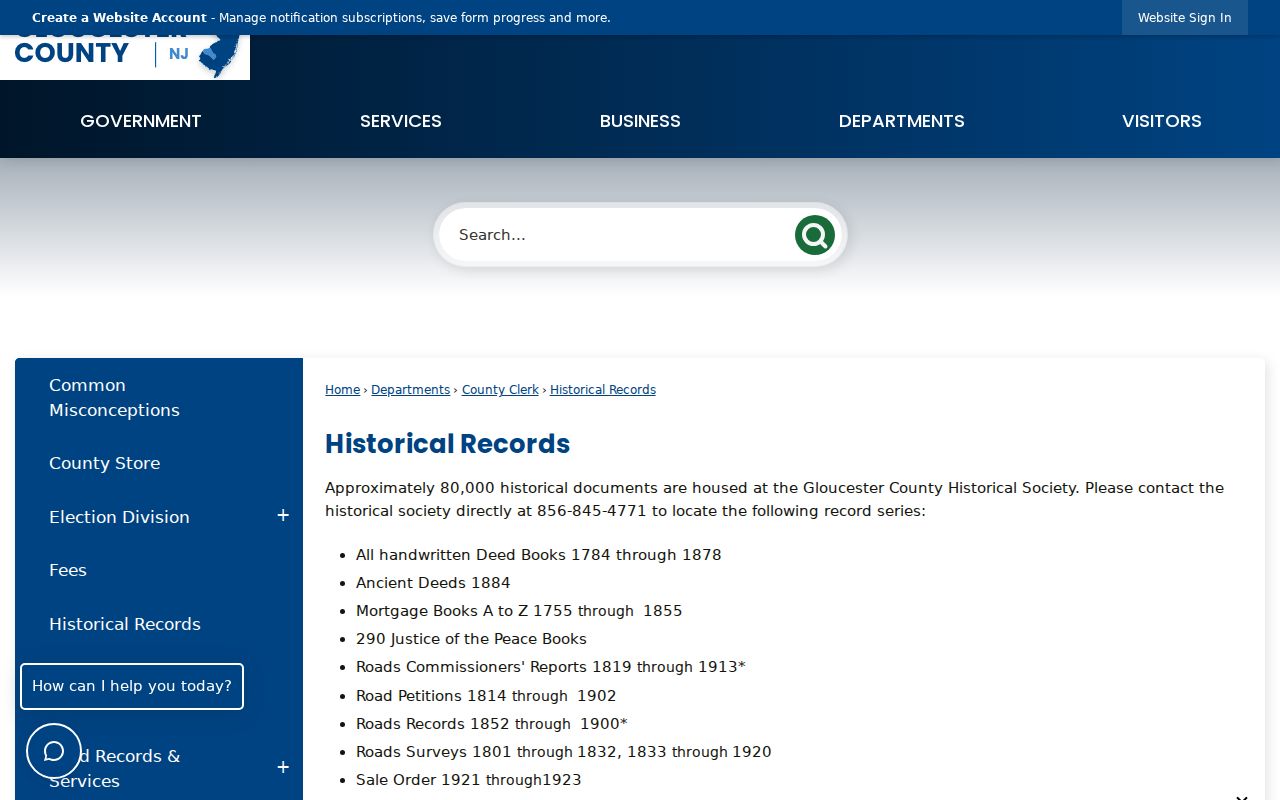
Bring the address, block and lot, time period, names, and known deed references to the repository. That preparation lets staff distinguish a Monroe Township property from records in another community or a similarly named place.
Pair Monroe Township Previous Residents by Era
Recorded deeds show ownership, while historic household sources can place people at or near an address. The 1913 Farm Journal Directory of Gloucester County is a strong online starting point for rural Monroe and Williamstown because it lists households, family relationships, address or route references, tenure clues, and local context. The 1860, 1890-91, and 1893-94 county-directory leads require title and page verification before they are used for a particular Monroe Township address.
- Start with the name, street or route, and ownership clue from a dated directory entry.
- Match it to the closest released federal census, using 1900, 1910, 1920, 1930, 1940, or 1950 as the period allows.
- Compare spouse, children, age, birthplace, occupation, route, and nearby household details without assuming the records were taken on the same date.
- Use a deed, tax card, newspaper, probate record, cemetery item, or map to explain a change in address or household.
For the collection titles, catalog paths, and how to read the 1913 entries, use the Monroe Township Directory Book. A complete local criss-cross directory run was not verified. Ask the Free Public Library, GCHS, New Jersey State Library, or Library of Congress for a specific title and year rather than assuming one exists.
Note: A directory and a census can disagree without proving a move, since they were collected at different times and for different purposes.
Map Past Residents Across Monroe Township
When an old deed or directory has no modern number, return to land identifiers. Use the legal description, tax block and lot, subdivision map, county GIS, historic atlas, road name, and adjacent owners. The Library of Congress collection identifies Williamstown Sanborn sheets for 1895, 1900, 1905, 1910, and 1923. They can show a building appearing, expanding, changing use, or carrying an earlier street label, but they are not deeds and usually do not name every owner.
The location itself can change labels without changing municipalities. Williamstown, Downer, Cross Keys, Cecil, New Brooklyn, Radix, and Victory Lakes can appear as community or postal names within Monroe Township history. No official Monroe renumbering or street-renaming event with a year was found in the research. Do not invent one. The reliable bridge is the parcel's legal description and map evidence, not an assumed address conversion.
Note: Sanborn sheets support building and street context, but a deed or tax record is needed to establish the parcel's recorded ownership trail.
Trace Monroe Township Family History
No official municipal house-history guide was located. The verified help route is the Gloucester County Historical Society's property and family research service, supported by its unrecorded deeds, surveys, newspapers, and genealogy resources. Its research-request form accepts a residence and the precise information wanted, along with an ancestor name, dates, relatives, and relevant facts. The published charge is $27 for members or $30 for non-members, including up to five printed or microfilm copies and postage.
The GCHS research-request form is the documented path for a focused residence inquiry.
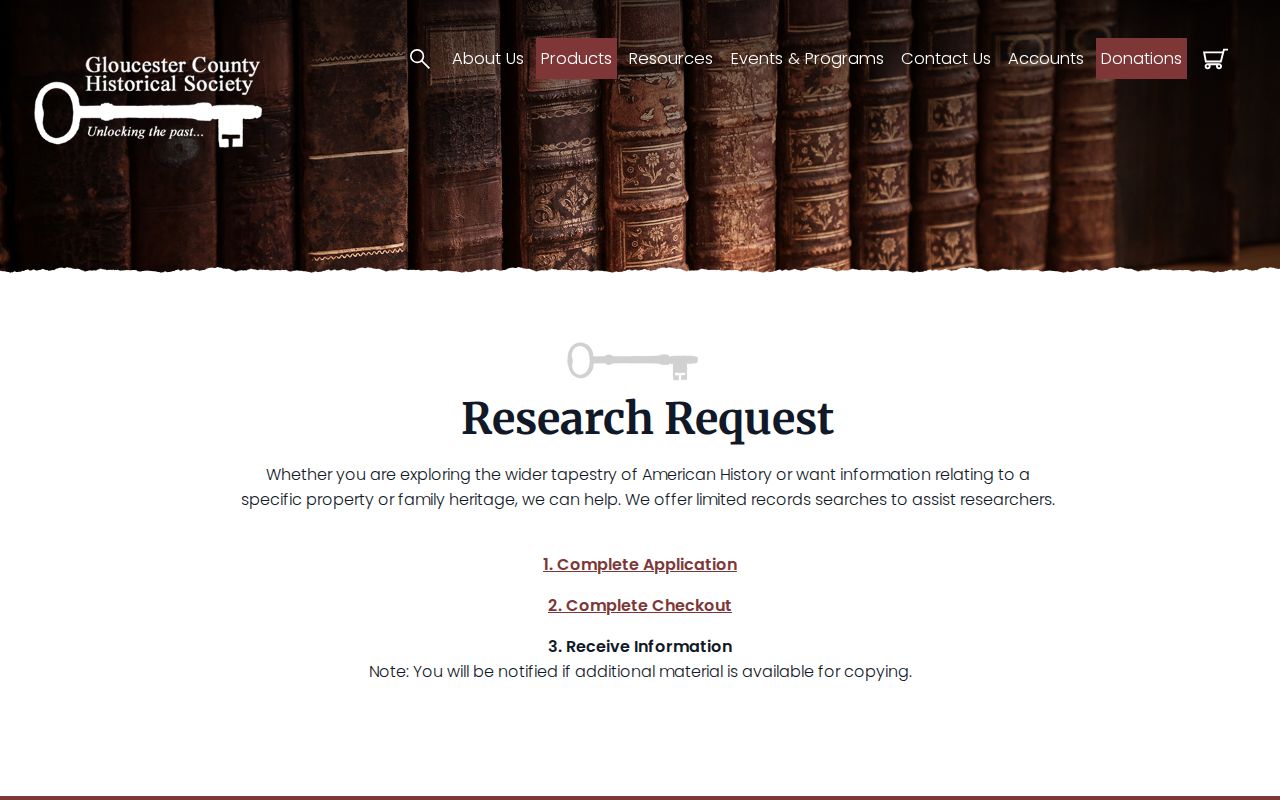
Give the repository the known address, date range, parcel identifiers, and a short question such as whether a named family appears in an identified property record. The Monroe Township Historical Society also reports Plain Dealer microfilm and a ScanPro reader/digitizer by appointment, offering a local newspaper path.
Close Monroe Township Past Resident Trails
Permits, obituaries, probate, cemetery material, and newspapers can close or clarify a property timeline. A zoning or construction file may name an owner or applicant and date work at a site. Probate can identify a decedent, executor, heirs, and estate clues, though access varies and some court files are restricted. Cemetery and obituary information supplies death and family context, not a current location for living relatives.
The Monroe Township Historical Society's historical resources include the Reading Room, Hall Street Little School, and Ireland Hofer House, plus the newspaper microfilm route. Those local settings explain why family history often needs both county land records and community sources. For a military endpoint, the Gloucester County Veterans Memorial Cemetery in Williamstown has an official plot locator. Treat every endpoint as evidence to compare with the parcel and date, not an invitation to contact people named in a historic notice.
Note: An obituary, burial entry, or estate file can confirm a historical event, but it does not reveal a living person's present location.
Respect Monroe Township Past Resident Limits
Past residents are harder to establish than past owners. A deed may list an owner, estate, trust, or company without naming the people who lived on the land. A directory may be a collection-period snapshot, while a census is a one-day enumeration. A map describes buildings and streets, not a household. Private address data, protected voters, children, and protected-person addresses have limits that must be respected.
Use a backward address search for house history, family history, estate questions, and local historical research. Verify important findings with the office or repository that holds the underlying record. New Jersey's Address Confidentiality Program and Daniel's Law can require redaction, so an omitted address or image does not establish that the record is missing.
Lawful use. Monroe Township previous-resident research belongs to careful historical and personal work. Do not use a past address, household clue, obituary, or record image to stalk, harass, intimidate, or harm a living person.